



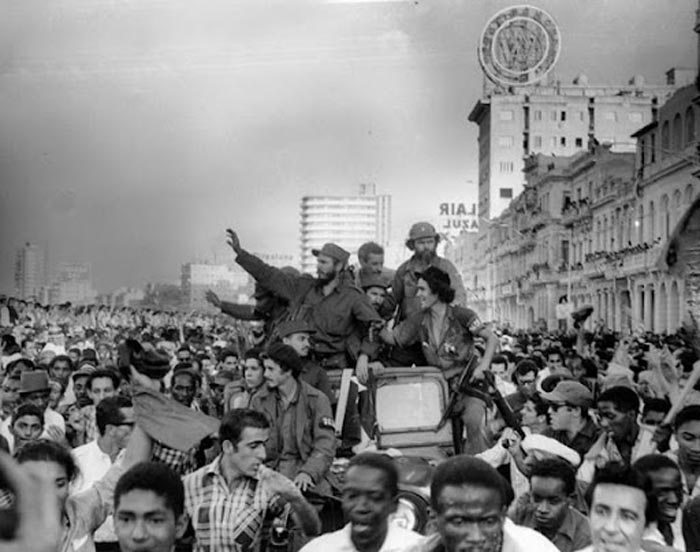
On January 8, 1959, the Freedom Caravan arrived in Havana after traveling through much of the country since its departure on January 2 from the city of Santiago de Cuba, led by Commander-in-Chief Fidel Castro and members of the victorious Rebel Army that had liberated the country from the dictatorship of Fulgencio Batista.
In the streets, public squares, and inside homes, the popular jubilation was palpable as the bearded revolutionaries passed by with the young Fidel at the head, and those who witnessed the event always remember the apotheosis of joy triggered by the Caravan along with a warning from the leader, who urged people to become aware of the new circumstances.
Implicit in this was Fidel's early appeal regarding the need to safeguard the newly established Revolution through unity and popular mobilization, for perhaps more difficult times lay ahead.
Every year since then, the Cubans have relived the symbolic journey from the East, which is linked this year to the centennial of the birth of the historical leader of the Revolution, born on August 13, 1926 in Birán, now part of Holguín province.
The arrival of that contingent of humble soldiers in Havana took place at La Polar, a neighborhood in the town of Cotorro, where the combatants were showered with cheers and hugs by residents that awaited them alongside the forces of Commanders Camilo Cienfuegos and Ernesto "Che" Guevara, who had arrived in the capital city days earlier, and the troops commanded by Juan Almeida and Raúl Castro Ruz.
Camilo and Che had recently led the victorious battles of Yaguajay and Santa Clara, respectively, which played a decisive role in securing the final triumph.
During the journey, as a surprise arranged by Camilo, the Commander-in-Chief momentarily savored the thrill of boarding the yacht Granma, moored at a dock near the grounds of the former Navy base.
On the night of January 8, the revolutionary leader addressed the people of Havana in a speech that has become legendary, delivered in the former Columbia military camp, eventually transformed into Ciudad Escolar Libertad (Liberty School City).
“We have come a long way and taken perhaps a considerable step forward. Here we are in the capital city, here we are in Columbia; the revolutionary forces seem victorious; the government is established and recognized by many countries of the world; we seem to have conquered peace, and yet, we must not be overly optimistic.
“While the people laughed today, while the people rejoiced, we were worried; and the largest the crowds that came to greet us and their jubilation were, the more concerned we were, because our responsibility to history and to the Cuban people also became greater.”
He warned people about how much remained to be done and about the certainty that the most difficult part was surely yet to come.
Perhaps at that time, the enemies of the Revolution underestimated the true strength and power that the Cuban process would achieve under the guidance and leadership of an exceptional leader, then in the prime of his youth, but these years of Revolution, freedom, and victories, and of challenging and difficult moments, have confirmed how wrong they were all along.
The arrival in 2026 of another edition of the Freedom Caravan will confirm the patriotic vocation of today’s Cubans, committed as they are to essential tasks for the improvement and growth of their country and to the protection of their land and of the achievements attained since 1959.
The Freedom Caravan: Apotheosis and awakened awareness
Nos reservamos el derecho de no publicar los comentario que incumplan con las normas de este sitio