



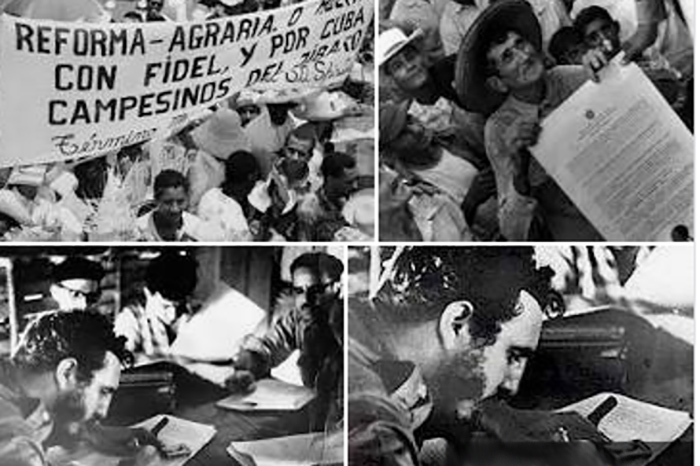
On October 3, 1963, the Revolutionary Government of Cuba signed the 2nd Agrarian Reform Law to put an end to latifundia by reducing land tenure to five caballerias (around 970 acres) from the 30 stipulated by the first Law of 1959, which was both a radical change to the farming system and the coup the grace to the counterrevolution in the countryside.
As Cuba started to feel the impact of the U.S. blockade and bloody terrorist, espionage and subversive plans were unleashed against the young Revolution, some 10,000 landowners—most of them hostile to the political process—were still in control of almost five million acres.
Regarding the need for the 2nd Agrarian Reform Law, the late historian José Cantón Navarro held that most of those whose estates were expropriated, who were allied with imperialism and Cuban oligarchy, "(...) began to hinder food production, to speculate with agricultural products, and to fund counterrevolutionary plans".
By 1963, the struggle against counterrevolutionary rebels entered its almost fifth year at a cost of hundreds of lives of combatants and peasants murdered by bandits supported by these landowners, whose elimination played a key role in the final crackdown on insurgency nationwide in 1965 by the Rebel Army, the National Revolutionary Militias and the State Security Organs.
In line with the current laws, those affected by the expropriation were offered, as compensation, 15 pesos per month for each caballería, albeit none would receive less than 100 or more than 250 pesos per month. Likewise, the President of the National Agrarian Reform Institute, the entity in charge of land management back then, was entitled to exempt those who had kept their land producing after the 1st Agrarian Reform and were willing to support the State's agricultural plans.
The 2nd Agrarian Reform Law freed the Cuban countryside forever from the capitalist structures of exploitation and opened a new stage, not without mistakes and negative tendencies but conducive to major social and economic transformations that vindicated the peasantry, the most exploited and vilified class during the colonial and pseudo-republican periods.
Second Agrarian Reform Law, a definitive blow to latifundia
Nos reservamos el derecho de no publicar los comentario que incumplan con las normas de este sitio