



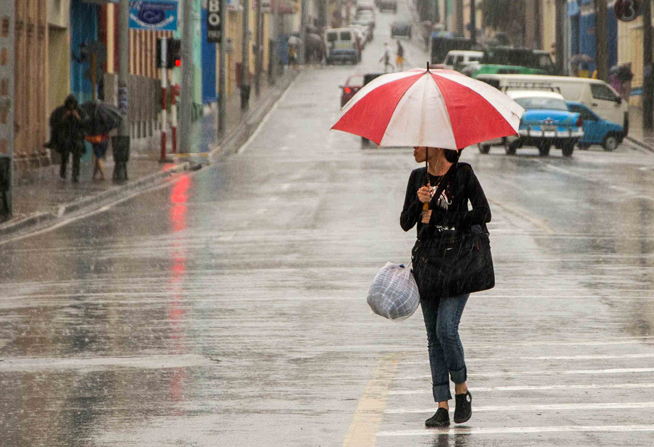
HAVANA, Cuba, Nov 1 (ACN) The low rainfall period in Cuba begins this month and extends until April, when approximately 26% of the annual accumulated rainfall is registered.
A particularity in its distribution in that period is its increase towards areas near the northern coast in relation to the rest of the territory, reported specialists from the Climate Monitoring Center of the Institute of Meteorology.
They pointed out that the phenomenon is associated with the transit of cold fronts over or very close to the territory, where the influence of their masses of arctic or polar origin that accompany the winter systems, causes a notable decrease in temperatures and in the humidity content of the air.
If the influence of these air masses is combined with the local occurrence of clear skies, weak or calm winds, and their persistence for several days, then noticeable minimum temperatures may occur, they warned.
They clarified that in the equatorial Pacific Ocean the conditions of a La Niña - Southern Oscillation (AENOS) event are maintained.
According to their models, this phenomenon should reach its greatest intensity late this year and begin to weaken early the next.
The experts indicated that the present climate outlook covers two quarters, November 2022-January 2023 and February-April 2023, and has been prepared based on the analysis of the evolution of the factors that regulate climate variations and the results of their prediction models.
However, they warned that such forecasts characterize the seasonal period as a whole, which does not mean that each month has to present the same behavior as that expected for the whole quarter.
This November concludes the cyclonic season in the geographical area of the tropical Atlantic Ocean, including the Gulf of Mexico and the Caribbean Sea, which began on June 1.
Low rainfall period in Cuba begins this month
Nos reservamos el derecho de no publicar los comentario que incumplan con las normas de este sitio