



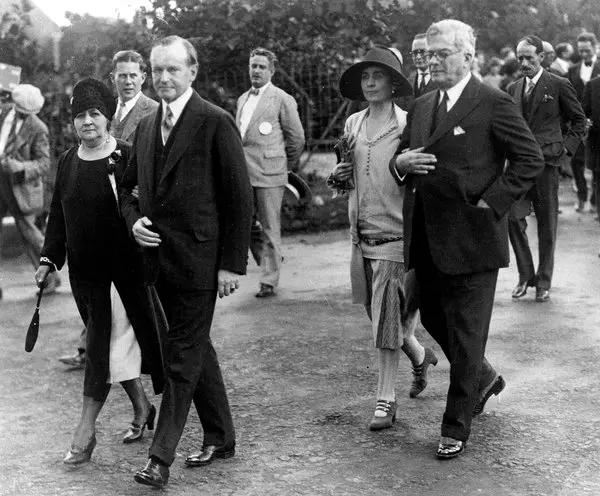
Although he managed to escape unscathed and die peacefully in 1939 in Miami Beach—where else?— Gerardo Machado, the Cuban tyrant, saw his dreams of ruling in perpetuity, ending communism and siding up with imperialism shattered on August 12, 1933, when he was toppled by a popular revolution led mainly by the labor unions and the leftist forces that he hated so much.
In the days leading up to his fall, he had behave with such ferocity and stubbornness to unleash repression that the U.S. government itself, of which he was an acolyte and faithful subordinate, kindly suggested that he leave power by means of a last minute mediation. But it was to no avail, for Machado was on a rampage.
Since he took office with the halo of having been a general of the Liberation Army, whose honor he no longer represented, he promised the US that during his mandate no strike would last more than 24 hours. And although he disguised his proposal with the slogan of building waterworks, roads and schools, he soon distinguished himself for his repressive methods against the workers' and students' movements and against feminism.
He persecuted anyone who opposed his government or demanded a right. Torture, harassment and assassination were part of daily life during his mandate, and the so-called machete plans he used to break up rallies became famous.
Small surprise, then, that he banned the Communist Party of Cuba founded by Carlos Baliño and Julio Antonio Mella on August 16, 1925 and closed the José Martí Popular University and the labor movement’s guilds.
Machado is known to have sent hitmen to Mexico City who gunned down the communist and student leader Julio Antonio Mella on January 10, 1929, a prelude of further violence in the country marked by the murder of the journalist Armando André—who disclosed a scandalous business deal made by Machado involving workers from the Canary Islands falsely accused of abusing a wealthy citizen—the closing of the University of Havana, a hotbed of revolutionary actions, and the killing of the workers’ leader Alfredo López, thrown into the sea with a lead bar tied to his neck, to mention just a few.
The Cuban Trade Unions sponsored a strike of bus drivers in Havana on July 23, 1933 that was soon joined by other sectors and marked the beginning of what became to be known as the Revolution of 1933, to which the poet Rubén Martínez Villena contributed selflessly and heroically.
It is worth mentioning the selfless and heroic contribution offered by the communist poet Rubén Martínez Villena, who suffered from terminal tuberculosis and yet helped lead the national strike from his deathbed, as did other outstanding leaders such as Lázaro Peña.
On August 1st, the army brutally repressed the population of Santa Clara and occupied the city. However, part of the army revolted the next day and led an uprising that forced Machado to flee from the Presidential Palace and take refuge in the Columbia Military Barracks and managed to evade justice.
Undoubtedly helped by his protectors and cronies he managed to evade the justice that such undoubtedly notorious character—whom Rubén Martínez Villena nicknamed "the donkey with claws"—rightfully deserved.
Machado established a government that represented the interests of the national bourgeois oligarchy and was open to U.S. capital to the detriment of an economic crisis already foreseen by previous governments. Truth be told, he built the Central Highway and Havana’s lavish Capitol Building, but he got the nation deep in debt, increased land-ownership, reduced sugar production, and turned unemployment, hunger and extreme poverty into part of Cuba’s everyday life.
Unfortunately, this so-called Revolution, so radicalized and combative, failed to achieve its ultimate goal. The oligarchs and right-wingers, together with their strong allies, did their utmost to thwart the project. However, it was one more link in the unique Cuban Revolution, its lessons and its hopes. The route of the struggle was already plotted.
Gerardo Machado in his labyrinth
Nos reservamos el derecho de no publicar los comentario que incumplan con las normas de este sitio