



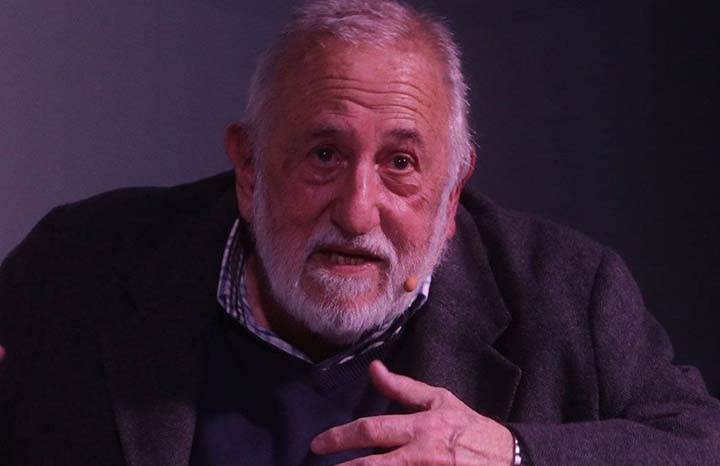
HAVANA, Cuba, April 28 (ACN) Argentine director Adolfo Aristarain (1943-2026) died on Sunday in Buenos Aires at 82, according to the Spanish Film Academy.
Author of an important filmography that earned him the 2024 Gold Medal, awarded by the Spanish Academy, which considers him one of the fundamental names in the history of Ibero-American cinema, Aristarain achieved prominence for his passion for film and his ability as a screenwriter and director to tell stories.
Films directed by Aristarain were presented at various editions of the Havana Film Festival; the first time was at the 4th edition, where Time for Revenge (1981) was recognized with the Coral Award, the film with which the festival had opened that year.
Another of his feature films, Martin Hache (1997), won the awards for Best Feature Film, Best Director, and Best Actress at the Havana Film Festival, cementing the artist's relationship with the event held every December in the Cuban capital.
He was later invited to serve as president of the Feature Film Jury and always maintained a close relationship of collaboration and respect with the Festival.
The news of Aristarain's death has sparked shock and deep sorrow in recent hours, especially among filmmakers in Latin America and Spain, including Tania Delgado, director of the Havana Film Festival.
The loss of Aristarain is another blow to filmmaking on the continent, as he was an authentic voice who brought the stories and conflicts of his identity to the screen, Delgado emphasized, adding that his death joins the recent farewells of other great figures of Argentine cinema.
Pedro Ortega, programmer of the Havana Film Festival, told the Cuban News Agency exclusively that Aristarain's films offered alternative perspectives on the history of Argentina, Spain, and their shared context, providing a human and sensitive map of reality.
The Foundation of New Latin American Cinema (FNCL) published a message of condolence on its social media, noting that Latin American cinema is once again in mourning, and describing the director as one of the leading figures of Argentine cinema—and his influence extended to the Iberian Peninsula—since he spent a significant part of his career there and left behind many close friends.
The best way to remember this filmmaker's impact is to review his filmography, discover the keys to his aesthetic principles, and revisit these stories, their protagonists, and the legacy left by his images.
Nos reservamos el derecho de no publicar los comentario que incumplan con las normas de este sitio