



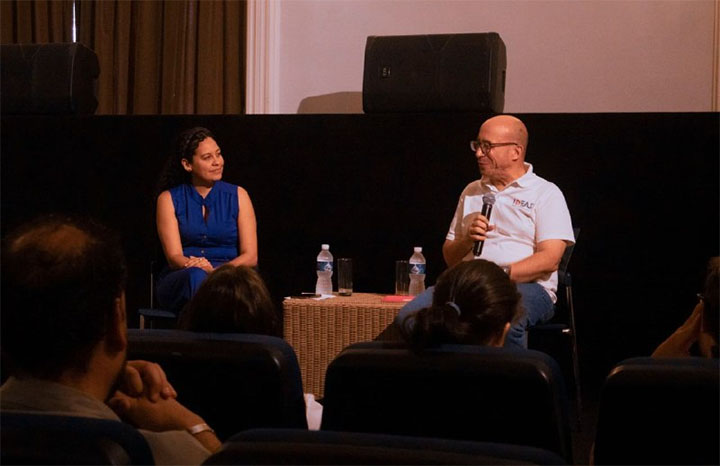
HAVANA, Cuba, April 29 (ACN) During a session of the event Con luz propia (In their own right), organized by the Union of Cuban Journalists (UPEC) at the Fidel Castro Ruz Center in Havana, Cuba’s renowned journalist Randy Alonso Falcón, director of Ideas Multimedios, shared anecdotes and reflections about his close relationship with the historical leader of the Cuban Revolution.
Before an audience of media directors, colleagues from the Cuban Institute of Radio and Television, young people from the Hermanos Saíz Association (AHS), members of the Union of Cuban Writers and Artists (UNEAC), students from the School of Communication of the University of Havana, and professionals from the communications sector, Mr. Alonso, who is also a TV presenter, recalled his earliest moments with the Commander-in-Chief, whom he first met as child at political events in the province of Pinar del Río.
He recounted how, as a six-year-old boy, he saw Fidel for the first time at an event to commemorate the 26th of July in 1976, an experience that marked the beginning of an admiration that would later develop into a close working relationship during the so-called Battle of Ideas.
Mr. Alonso highlighted the revolutionary leader's extraordinary vision of students as a "strong force" of the Revolution, and recalled how, in November 1991, while serving as a leader of the Federation of University Students (FEU), the Commander summoned them to warn them about the imminent disintegration of the Soviet Union.
“It was a master class in politics and history”, he assured in reference to Fidel's most human and didactic side, based on his insistence that they should study the wars of independence and other life-related topics in depth. “He was a father to all of us, paying frequent visits to the FEU headquarters and showing his concern about the students' meals during the Special Period”.
Mr. Alonso described Fidel as a man "ahead of his time" with a unique ability to anticipate problems and devise strategies and to come up with initiatives such as distributed power generation, the social workers’ movement, comprehensive development courses, and the battle for the return of the child Elián González, successfully undertaken by Fidel, who knew to organize youth as a political force in the streets.
"Fidel taught us that truth is paramount, that politics requires a strategic approach, and that ethics must prevail above all else," he pointed out, making reference to the leader's kindness toward women and his ability to understand human psychology, even amidst harsh criticism.
In closing, the journalist reaffirmed that Fidel Castro was not only a political leader, but a constant educator capable of turning any conversation, even a dinner table discussion, into a lesson in revolutionary commitment and social justice.
Nos reservamos el derecho de no publicar los comentario que incumplan con las normas de este sitio